
Attorney General Ellison sues e-cigarette manufacturer Loon for unlawful sales of flavored vapes that appeal to minors
Lawsuit filed in Ramsey County seeks permanent injunction and monetary relief
July 15, 2026 (SAINT PAUL) — Attorney General Ellison filed a lawsuit in Ramsey County today against e-cigarette manufacturer Maduro Distributors, Inc., doing business as Loon, for the illegal manufacture, distribution, and sale of flavored vapes that appeal to youth. Loon has sold these nicotine-laced products in flavors like “Cotton Candy,” “Strawberry Popsicle,” “Banana Taffy,” and “Blue Razz Slushy,” and has also used kid-friendly characters to promote its vapes. Loon also represented to the public that its products were “accepted for approval” by the FDA, when in fact the FDA has never authorized Loon to market its tobacco products.
"Today, I filed a lawsuit to halt the distribution and sale of Loon vapes in Minnesota," said Attorney General Ellison. "State law bans the sale of e-cigarettes that are designed to appeal to young people. By selling vapes with flavors like Cotton Candy, Blue Razz Slushy, and Mountain Dude, Loon is in clear violation of that law. I have no tolerance for corporations that prey on young people to turn a profit, from big tobacco to big tech and beyond. As long as I am Attorney General of Minnesota, this office will fight to protect young people across our state.”
Minnesota has a long, proud history of working to protect Minnesota youth from nicotine products. In 2020, the Minnesota legislature raised the minimum purchase age for tobacco products from 18 to 21 years old. In 2024, the Legislature passed a law prohibiting the sale of deceptive vapor products in Minnesota. Such products include e-cigarettes that depict or use the terms for food, beverage, dessert, or candy commonly marketed to minors, brands commonly marketed to minors, and products depicting a character, personality, or symbol known to appeal to minors, including characters from movies, TV shows, video games, and more. In August 2024, the Attorney General sent a letter to more than 5,000 tobacco distributors and retailers, including Loon, asking them to stop selling these illegal flavored tobacco products in Minnesota. In January 2025, Attorney General Ellison announced his office had launched an investigation into Loon for violating Minnesota’s deceptive-vaping and consumer-protection laws.
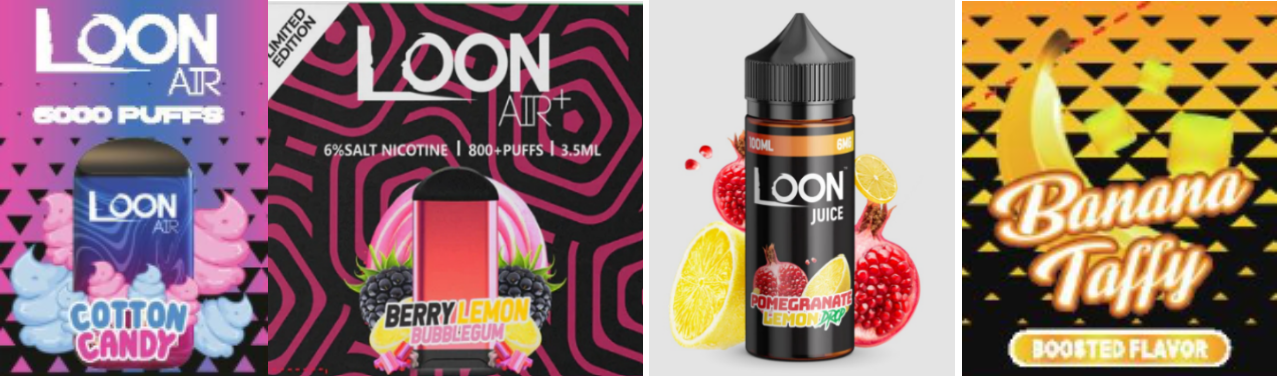
Loon, however, flouted these laws and continued to sell dozens of vape products that violate Minnesota law even after receiving the Attorney General’s warning letter. Loon sold several products that used the names, flavors, and images of candy, including cotton candy, banana taffy, berry lemon bubble gum, and pomegranate lemon drop:
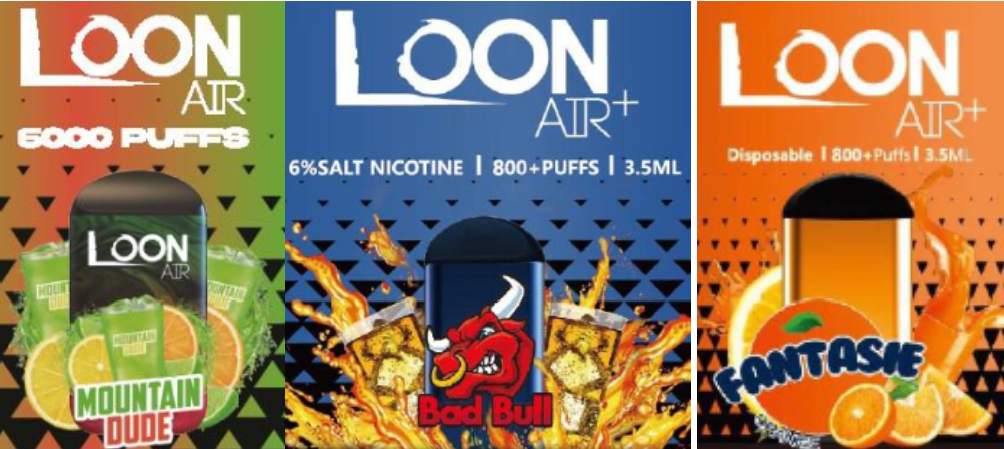
Loon also marketed and sold vape products that used the names, flavors, and images of kid-friendly beverages, including Mountain Dew (“Mountain Dude”), Red Bull (“Bad Bull”), and Fanta (“Orange Fantasie”):
Loon also marketed and sold vape products that used the names, flavors, and images of desserts, like popsicles and vanilla custard:

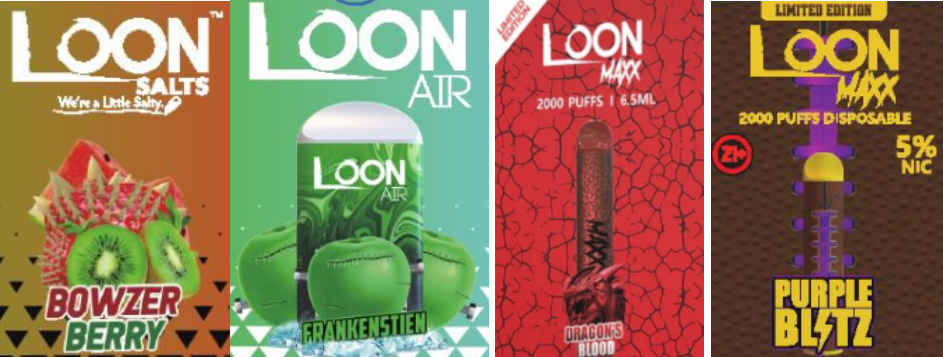
In addition to using kid-friendly food flavors, Loon also uses kid-friendly characters and imagery in marketing and selling vape products, including Bowser from Super Mario (“Bowzer Berry”), Frankenstein, dragons, and a “Purple Blitz” product that appears to reference the Minnesota Vikings:
Loon sold these products in both English- and Spanish-language packaging and descriptions that highlighted the candy, soda, dessert, characters, and other youth-appealing aspects of the vape products.
These products are a clear violation of Minnesota’s deceptive vapor products law, which states in part:
A person or entity must not market, promote, label, brand, advertise, distribute, offer for sale, or sell a vapor product by:
- imitating a product that is not a vapor product, including but not limited to:
(i) a food or brand of food commonly marketed to minors, including but not limited to candy, desserts, and beverages;
[...]
(iii) a product based on or depicting a character, personality, or symbol known to appeal to minors, including but not limited to a celebrity; a character in a comic book, movie, television show, or video game; and a mythical creature;
Moreover, for years, Loon deceptively marketed its products as “accepted for PMTA approval from the FDA.” Loon has used this banner image on its websites:

“PMTA” stands for premarket tobacco product application, which is the application that tobacco manufacturers file with the FDA seeking authorization to market their products under federal law. None of Loon’s products, however, have been accepted, approved, or authorized for sale by federal regulators. Rather, the “acceptance” stage only required an initial confirmation that Loon’s products fall under the FDA’s jurisdiction and that the application included required information.
Based on this language, the average, reasonable consumer—who has little to no understanding of the PMTA process—would believe that Loon’s products had been accepted and certified as safe for use by federal health-and-safety regulators, which is not the case.
The Attorney General’s lawsuit alleges that Loon’s misconduct violates Minnesota’s prohibition on deceptive vapor products and Minnesota’s general consumer protection statutes. The Attorney General is seeking a permanent injunction against Loon, civil penalties of up to $25,000 per violation, restitution and/or disgorgement, and recovery of his office’s attorney fees and costs in connection with the investigation and litigation.
Attorney General Ellison’s history of protecting young Minnesotans
Vaping
Attorney General Ellison has repeatedly taken action to protect young Minnesotans from e-cigarettes. In December of 2019, Attorney General Ellison filed a lawsuit against e-cigarette manufacturer JUUL for deliberately and illegally marketing their addictive and harmful products to young people, and a year later, the state added JUUL’s parent company, tobacco giant Altria, as a defendant. In March of 2023, the case went to trial and Attorney General Ellison delivered the opening statement on behalf of the state of Minnesota, which he led by saying that “Juul and Altria hooked Minnesotan children on e-cigarettes — so they could make money.” In May of that year, Minnesota reached a historic $60.5 million settlement with JUUL and Altria, which was the highest settlement per capita any state reached with the companies. The funds from the $60.5 million settlement were put towards smoking and vaping cessation programs for youth.
In January of 2025, Attorney General Ellison filed a consumer protection lawsuit against High Light Vapes, an e-cigarette manufacturer that sold e-cigarettes designed to look like highlighters so students could more easily conceal e-cigarettes at school. In April of 2025, Attorney General Ellison announced he reached a settlement with High Light Vapes that banned the company from doing any business in the state of Minnesota.
Social media
In October 2023, Attorney General Ellison sued Meta, the parent company of both Facebook and Instagram, alleging that the company designed app features to deliberately addict young people for profit and at the expense of their mental health and well-being. In August 2025, Attorney General Ellison and a bipartisan coalition of attorneys general wrote a letter to Instagram to express serious concerns over a new feature that allowed users’ precise locations to be shared on a map, which endangers young users. The letter urged Instagram to take immediate action to change the feature in order to better protect young people.
In August 2025, Attorney General Ellison filed a lawsuit against TikTok for deliberately ensnaring young users in cycles of excessive use through app design features that prey on young people’s neurodevelopmental vulnerabilities. The lawsuit alleges that TikTok works to addict young users to maximize their time spent on the app in order to squeeze time, attention, data, and even money out of young people, all while harming their mental health. In March 2026, Attorney General Ellison defeated TikTok’s motion to dismiss his lawsuit against the social media giant.


